

One of the oldest ways for preserving summer’s best berries is making black raspberry jam without pectin, by using only a couple of natural components. It is a technique that finds favor among home cooks and foragers with small collections or wild berries who do not want to use commercial additives.
They do not rely on the pectin from the store but instead let the jam thicken through slow cooking, sugar, and the natural sourness of black raspberries, sometimes with the help of a dash of lemon juice.
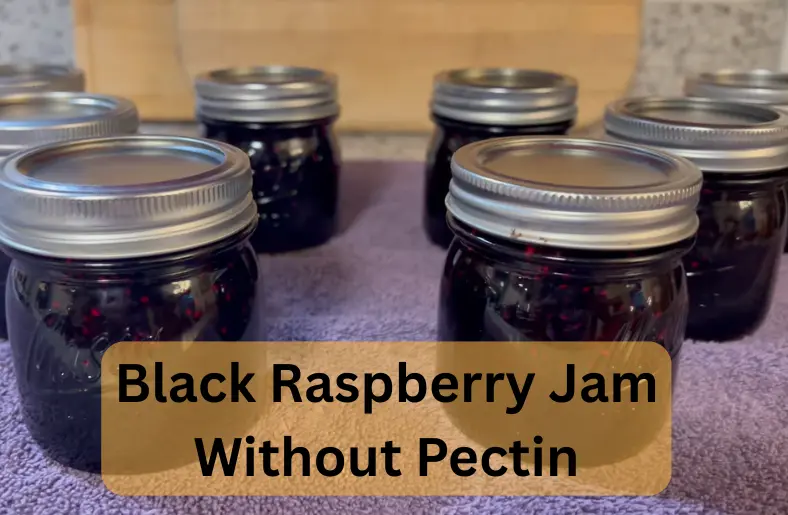
The outcome is not only jam with the soft-set consistency but also a jam with a rich flavor profile which is closer to the taste of fresh fruit than factory-style preserves. In any case, whether you are a novice in canning or you like a conventional approach, this guide will lead you step by step through making, storing, and savoring black raspberry jam without pectin.
What Is Black Raspberry Jam Without Pectin?
Making black raspberry jam without pectin is an age-old method that uses no thickening agents but instead relies on the natural structure of the fruit. I have been making this jam for years with little harvests and the process has always felt honest and simple. It is just a mixture of black raspberries, sugar, and sometimes lemon juice, but the jam is already thickening if it is cooked slowly.
Natural methods like this one are preferred by home canners and foragers working with unpredictable harvests. A preserve is produced with unsightly seeds, a creamy texture, and a strong berry taste that is nothing but mouthwatering fruit. Unlike machine-made spreads, this homemade way gives a rich taste that is a telltale sign of care, time, and flavor—just the way black raspberry jam should be made.
Why Make Black Raspberry Jam Without Pectin?
The pectin-free black raspberry jam-making process is perfect for those who seek a pure, minimal-ingredient method of fruit preservation. It is especially suitable for wild and home-picked black raspberries, which are the ones that along with the natural acidity do not need any pectin or a further addition of pectin.
Personally, the whole procedure seems easier and more adaptable, which is a great advantage when it comes to making small batches and dealing with variable harvests.
A lot of home canners appreciate the process for its truly berry-flavored outcome and the lack of additives. By cooking carefully, patience, and adding lemon juice the jam can be thickened naturally. The outcome is a soft-set, rustic, thoroughly flavored , and genuinely homemade black raspberry jam.
Black Raspberries vs Blackberries
At first sight, black raspberries and blackberries appear to be the same fruit, but actually, they are quite different upon close contact with the latter. According to my personal picking experience on the vine, black raspberries are hollow inside when they are picked, while blackberries are still firm and solid inside. This small detail becomes key when making no-pectin jam.
Black raspberries are smaller, naturally sweeter , and softer, with an aromatic, deeper flavor and concentrated flavor that works well for jam. Their softer structure and higher natural acidity support natural thickening during slow cooking, making them better suited for homemade preserves.
Blackberries are larger, which can cause texture issues and setting issues if you don’t have an understanding difference before you start.
Ingredients That Make a Natural Jam Set
- Jam making always starts with honest ingredients, clean, and simple, which is especially true when dealing with wild harvests.
- The recipe’s backbone consists of either fresh or frozen black raspberries, which contribute natural acidity, a deep rich flavor, and natural structure to the jam.
- To create a perfect blend, granulated sugar brings its mild sweetness and thickness to the jam through slow cooking.
- Just a tiny bit of lemon juice is very important for the flavor enhancement and for the support of the natural gelling process without the use of pectin from the store.
- This no-pectin procedure brings forth a dependable natural set that resembles the old-fashioned technique of making black raspberry jam.
- To me, the process is still very flexible, and that is why it is very ideal for small batches and considerate home canners who prefer basic ingredients to shortcuts.
Step-by-Step: How to Make Black Raspberry Jam Without Pectin
Step 1:
Making Black Raspberry Jam Without Pectin requires a lot of patience and is indeed a very tranquil process, it mainly depends on the latter. I always begin with “mise en place”, which is actually a French term that denotes the setting up of all ingredients in an orderly manner.
For me, in this case, ‘mise en place’ refers to black raspberries, sugar, and lemon juice, which when combined yield a jam with no other than their simplicity an intense and genuine fruit flavor. I check my jars first.
Step 2
I am going to store or canning the jam, I keep the jars and lids in boiling water for 10 minutes to sanitize them. For a small batch just for the fridge, clean jars will be alright. Doing this ahead of time eliminates a large amount of stress when the jam is scorching hot and ready to be served.
Step 3:
Next, I give the berries a light rinse and put them into a large pot. I crush them with a fork or a potato masher until the juices come out. This is an important step as the fruit that is mashed evenly will not only cook but also help the natural thickening process to start without the aid of pectin.
Step 4:
Once mashed, I mix in the sugar and add fresh lemon juice. The lemon does more than add brightness—it helps the jam set naturally. I usually let the mixture rest for 5–10 minutes, giving the sugar time to dissolve and pull more juice from the fruit.
Step 5:
Next, I put the pot on medium heat. I keep on stirring the mixture all the time as it heats up. When the mixture boils vigorously, I turn the heat a little up and keep on stirring. The jam is cooked in this manner of boiling for about 8 to 12 minutes depending on the size of the batch and the width of the pan. If you stir often, the jam will not stick or burn at the bottom.
Step 6:
To see if the jam is ready I use the gel stage tests. The temperature test indicates that the jam is around 220°F (104°C), but I rely on the spoon test too. When the jam detaches from the spoon in a thick sheet rather than in separate drops, it is almost finished.
Step 7:
After the jam is set I turn off the heat and very carefully pour the hot jam into the prepared jars, leaving a headspace of ¼ to ½ inch. I clean the rims, put the lids on, and secure the bands to fingertip tightness. From this point onwards, the jars are either subjected to a boiling-water bath for 10 minutes or allowed to cool down and then stored in the refrigerator.
Tip:
If you want a faster, firmer set along with a more structured method, you can consider Black Raspberry Jam with pectin Jam as an alternative approach.
How Black Raspberry Jam Sets Without Pectin
Black Raspberry Jam Without Pectin naturally sets because the fruit already contains natural pectin. When the berries cook, this pectin is slowly released through steady heat and gentle boiling. I’ve made this jam at home many times, and patience really matters here. Rushing the process never works.
As the jam cooks longer, sugar plays an important role. It helps with sugar binding while moisture evaporation thickens the mixture. This is why the jam starts to thicken naturally instead of staying runny. Adding a little lemon juice is key because it helps boost acidity and strengthens gelling process without using commercial pectin.
Watching for the proper temperature is important. Once reached, the jam will hold shape after it cools, giving you a soft set that feels traditional, homemade, and spreadable.
Small-Batch & Wild Berry Jam Method
Working with wild berries means accepting harvests that come in small amounts and often uneven amounts. This small-batch method of preserving black raspberry jam without pectin a cup or two at a time allows for nothing but waiting the collection of a large quantity.
As a participant who has seen the foragers collect and share the wild black raspberries during the process, I most of the times employ the method of storing fruit in the refrigerator or freezer until there is enough for one batch. Avoiding commercial pectin makes the recipe very flexible, easy, and simple to scale up or scale down without affecting texture or taste.
The flavorful and naturally acidic berries compared to cultivated varieties are the reason for no-pectin jam. Concentrating the juices through cooking slowly helps to give a deep berry taste. This fits a genuine foraging way of life where the produce is not guaranteed and only the most efficient ways of using it matter.
The combination of a shorter ingredients list, smaller batch size, and fewer specialty supplies enables home cooks to reduce waste, keep the seasonal fruit, and have fresh-tasting jam without tricky modifications. If you’re a wild or hard-to-find berries lover, then the Thimbleberry Jam made under the same small-batch policy could be your next favorite way of preserving.
Seeded vs Seedless Black Raspberry Jam (No Pectin)
Many people start with seedless jam because they want a smooth spread and more ease. I usually make this by cooking berries, then cooked briefly and straining them through a jelly bag or fine strainer. This helps with juice extraction and natural thickening, so the strained juice can reach the gel stage with sugar and set properly, even without pectin or commercial pectin.
Others prefer seeded jam, where you keep seeds instead of remove seeds. This traditional option needs less preparation and gives a slight crunch, better texture, and deep flavor from black raspberries. It feels rustic, homemade, and full of authentic experience, based on personal preference. Readers who enjoy smooth, seedless spreads may also appreciate tropical options like Passion Fruit Jelly, which offers a completely different flavor profile.
Canning, Storage & Shelf Life
The storage of black raspberry jam without pectin is equally important to the cooking aspect. I rely on boiling water bath canning method, the safest option, which gives me a ready-to-eat and safe preserve that can be stored at room temperature for a long time. My jars are always completely cleaned and then disinfected in boiling water.
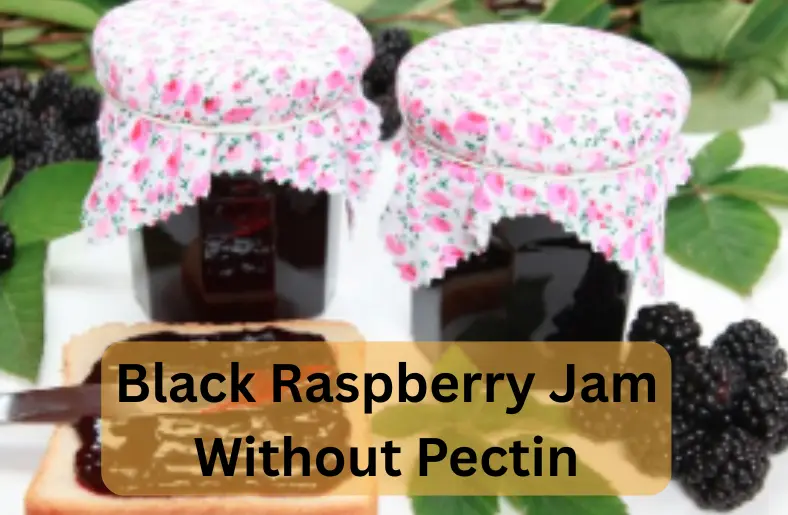
The hot jam gets poured into warm jars through a ladle while a headspace of ¼ inch to ½ inch is left. After lids and bands are on, the jars go into the boiling-water canner for the recommended time to create a vacuum seal that protects against spoilage.
The jars I have processed are kept in the same place for 12 to 24 hours and are allowed to cool off completely. A jar that has sealed properly will have a lid that is hard and will not give way when pressed down. Sealed jars can be stored for one year in a cool dark place, where the flavor and quality are protected. The jam should be refrigerated and consumed within a few weeks after being opened.
If I do not do water-bath canning, black raspberry jam without pectin can still be kept safely in the refrigerator or freezer. Jam in the fridge lasts 2 to 3 weeks, while jam in the freezer can last for several months if stored in airtight containers. Since there is no commercial pectin used, the texture might continue to firm up as it cools which is normal.
Regardless of the storage method I choose, I always look for signs of spoilage before consuming.
FAQs:
Do I need pectin for black raspberry jam?
Not at all, pectin is not required for black raspberry jam. The black raspberries from nature possess the acid that is essential for making jams and jellies and when they are slowly cooked with sugar and lemon juice, the jam that forms is quite excellent.
Can raspberry jam be made without pectin?
Yes, it is possible to make raspberry jam without using pectin. The conventional jam-making technique relies on the fruit’s natural pectin, the right amount of sugar, and the cooking time to allow the formation of a good gel for cooling.
What thickens jam without pectin?
The jam contains fruit as its main ingredient and natural pectin from fruits thickens it, sugar concentration, and evaporation during cooking. Longer simmering and gel stage testing are better than starches in this process.
What’s the difference between blackberry jam and black raspberry jam?
Blackberry jam is less intense and has a less deep flavor compared to black raspberry jam which is very rich and strong. Black raspberries are smaller, more fragrant, and contain more seeds than blackberries, thus their flavor is a bit more intense than that of blackberries.
What is the raspberry jam rule?
The “raspberry jam rule” denotes a metaphor instead of a culinary rule. It indicates the concept that dilution weakens something—unlike in jam-making, where concentration amplifies both flavor and texture.
Final Thought:
Making black raspberries without pectin is not only a rewarding process of preserving the berry’s true taste with the help of simple ingredients but also a very delicious one. You have full control of the flavor, texture, and sweetness with the natural acidity combined with the right cooking techniques.
This method, however, is perfect for small batch production, wild harvests, and home kitchens that prefer to go the traditional way of food preservation. By understanding how jam sets naturally and mastering gel tests and safe storage, this approach builds confidence and flexibility.
If you’re new to canning or prefer a natural process, no-pectin black raspberry jam delivers authentic flavor and dependable results every time.
