

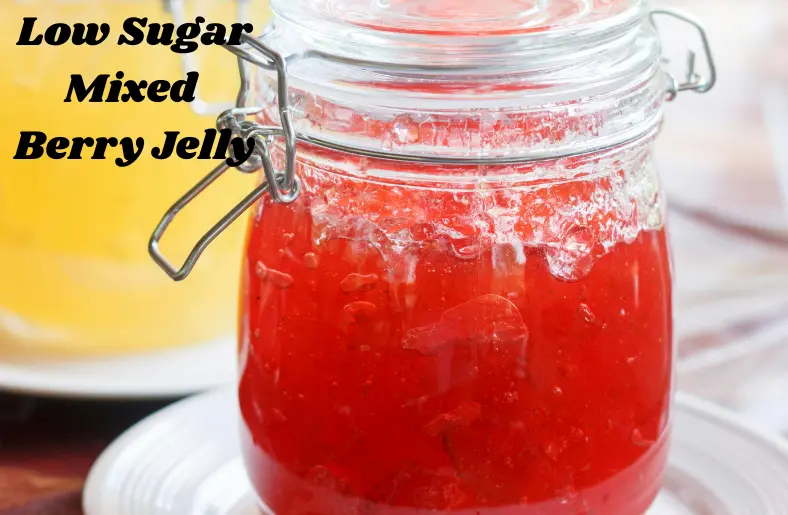
My own experiences during berry picking afternoons taught me that low-sugar mixed berry jelly could easily be the best way of fruit juice. I love to maintain the freshly fruit flavor, no matter if the recipe attracts with store-bought mixed berry juice or a friendly batch I press at home. In every season of the year, when time is short, gentle canning with less sugar than traditional jelly and no special equipment beyond basic canning tools feels like honest therapy. It is perfect for beginners and for those who just want a quick and flavorful spread that simply works.
The habit starts with our family Jam & Jelly Recipes page, creating homemade jams and jellies from a cozy mix of strawberries, blackberries, blueberries, raspberries, and mulberries. The jars filled with jam turn into a heartwarming gift that keeps me connected to this craft.
What Is Low Sugar Mixed Berry Jelly?
strawberries, blueberries, raspberries, and blackberries — but formulated with reduced sugar content while still preserving rich flavor and natural sweetness. Unlike traditional jelly, which relies heavily on refined sugar for taste and texture, low sugar versions use natural fruit sugars, balanced sweeteners, and low-methoxyl pectin to create a lighter, healthier spread.
Health Benefits of Low Sugar Mixed Berry Jelly
Low Sugar Mixed Berry Jelly is a product that besides being delicious, is also a very smart choice over the regular sugary fruit jams, because it has so many health benefits. The combination of these berries—strawberries, blueberries, raspberries, and blackberries—is rich in nutrients; it allows the fruit spread to have the taste and smell of fresh fruit but at the same time a very significantly lower amount of sugar.
This less sweet mixture is a great way to support the adoption of more healthy dietary habits by reducing the intake of calories and sugar and minimizing the risk of sudden blood sugar rise which is usually associated with the consumption of sugar. Hence it is suitable for those who are weight-conscious or for those who are just trying to keep their sugar intake low.
Apart from having less sugar, Low Sugar Mixed Berry Jelly is also an excellent source of antioxidants, such as polyphenols and anthocyanins, that are believed to protect cells from oxidative damage and, at the same time, support the health of the heart, immune system, and general well-being. The natural fiber and vitamin content that comes from mixed berries also plays a role in aiding digestion and providing constant energy which makes this fruit spread the ideal option for balanced breakfasts and light snacks.
Being a non-dominant sweetness with a fruit flavor, rather than an excessively sweet taste, Low Sugar Mixed Berry Jelly is easy to include in diets that require conscious eating, clean eating, and nutrition-based healthy living plans. It can be enjoyed either on whole-grain toast, layered in yogurt, or incorporated into home recipes; Low Sugar Mixed Berry Jelly lets you experience the richness of mixed berries in a more natural way that is lighter, making it a dessert and a daily meals alternative to conventional jelly spreads that can be both thoughtful and beneficial. If you enjoy light and naturally sweet fruit spreads, you may also like my Low Sugar Rhubarb Jelly, which offers a gently tangy flavor with reduced sugar for a more balanced jelly option
Quick Kitchen Flow: Making Jelly
When I make Low Sugar Mixed Berry Jelly, I start by sharing my own kitchen habit — I always Prep my jars, gather tools, and keep everything safe for home canning. I Mix a small amount of sugar with pectin to prevent clumping, then I Combine juice, lemon juice, and a touch of butter with the sugar-pectin mix in a large pot. I Bring it to a gentle boil, stirring constantly, then Add the remaining sugar and return it to a hard boil for 1 minute. I Ladle the hot jelly into jars, Wipe rims, apply lids, and screw the bands fingertip-tight. I process in a water bath canner for 10 minutes, then cool the jars undisturbed for 12–24 hours, check the seals. For readers who prefer jams that set naturally, you can also explore my Strawberry–Rhubarb Jam Without Pectin, a recipe that relies on the fruit’s natural pectin for a smooth, low-sugar homemade jam.
Ingredients
Working on this recipe at home, I always start with granulated sugar, because it sweetens the jelly and works with pectin to help it gel properly while keeping it low-sugar and less heavy than traditional versions. Using organic sugar where possible pairs well with Sure-Jell — this specialized pectin that allows the jelly to set with low, almost no extra sugar added, still achieving a sweet spoon-soft jam.
From experience, a blend of mixed berry juice becomes the base of the jelly; my favorite store-bought 100% organic juices from Aldi bring a consistent flavor with blends of tart, high-acid berries like raspberry, cranberry, and blackberry, giving great results. When lower-acid fruits such as blueberries are included, a splash of lemon juice can boost acidity for better, improved shelf stability and a more consistent gel — I prefer bottled lemon for reliability. A small optional pat of butter reduces foaming during cooking, making the process smoother with less skim-off before filling the jars.
My Step-by-Step Kitchen Routine for Making Mixed Berry Jelly
- I always prepare my jars, and I wash the jars, lids, and bands in hot, soapy, water. I keep the jars warm and ready to use for processing and canning — even for 10 minutes or longer — so there’s no need to sterilize when they are clean. I remember that adding hot ingredients to a warm, hot jar is best practice because the glass doesn’t change temperature too quickly and crack.
- I add water to the canner and start the heat so the water stays warm before I add the jars.
- Then I Add juice, lemon juice, and butter into a large pot, combine 1/4 cup sugar and pectin, and whisk it in. I like adding a little bit to help the pectin not clump when added; I bring the mixture to a boil over high heat, stirring constantly so it doesn’t burn.
- I add the rest of the sugar and return it to a full, rolling boil — a hard boil for 1 minute, still stirring constantly. It cannot be stirred down.
- I remove it from the heat and skim off the foam if needed.
- I Ladle the jelly into warm jars, leaving a ¼-inch headspace. I wipe the rims with a clean cloth, center the lids, and put the band’s finger-tip tight.
- This careful flow helps me craft a low-sugar berry jelly with steady rhythm and real-life kitchen confidence.
My Hands-On Water-Bath
The routine in my kitchen goes like this: I take my jelly and make sure it has undergone a hot water and gentle bath. The whole process is done inside a canner that is neither too big nor too small. I know from experience to keep track of the time for 10 minutes, while the processing takes place and the jars are next to the timer. When the mixture is bubbling gently, I remove the lid and let the jars rest for 5 minutes.
Then I use a jar lifter that offers steady support to bring the jars to the counter where they will be left undisturbed for 12-24 hours. Afterwards, I take off the rings, look at the seals under the lids and make sure that each one has a strong seal. Any jar that doesn’t pass the test goes to the refrigerator for a few weeks, while the properly sealed ones I put away in a cool and dry place.
Homemade vs Store-Bought: A Berry Smart Choice
In my home, I keep a jar of store-bought mixed berry jelly, usually from premium brands that have sugar-free options, that brings in about 7–10 grams of added sugar per tablespoon. Many even use high-fructose corn syrup, while I make a low-sugar mixed berry jelly at home with around 6 grams of sugar per tablespoon.
I am the one who controls all the ingredients at home — no artificial sweeteners — and I get to enjoy the natural berry flavor and mild sweetness. Plus, I am the one who gets to choose the pectin type that fits our taste, and thus, a healthy spread is made that my family loves during breakfast. This easy method gives me relaxed confidence since every jar indicates care, selection, and the dazzling character of fresh fruit. If you enjoy unique fruit-forward flavors, my Strawberry Guava Jelly is another delicious option, combining the sweetness of strawberries with the mild tropical taste of guava for a beautifully balanced jelly.
Conclusion
In my kitchen life with Low Sugar Mixed Berry Jelly, I carry the lessons I learned while working with strawberries, blueberries, raspberries, and blackberries. From my own berry-picking afternoons, I found that keeping the fresh fruit taste matters more than heavy sweetness. This spread, made with mixed berry juice, gentle heat, and mindful canning, lets me enjoy flavor with less sugar while still feeling rich and comforting.
My experience using low-methoxyl pectin and careful timing gives me steady confidence, whether the batch comes from a cozy home press or a trusted store blend. Each jar reminds me of simple routine, family sharing, and the quiet joy of a healthier spread that fits daily meals as naturally as it fits my personal kitchen rhythm.
FAQs
What happens if you add less sugar to a jelly recipe?
No one wants to have gritty jelly on their morning toast. If you don’t add enough sugar to your jelly, it won’t set and will be runny
Which jelly is low in sugar?
From my kitchen trials, I enjoy Low Sugar™ Jelly where Concord Grape taste shines with less sugar and half the calories.
Can you make blackberry jam with less sugar?
Fruit is naturally sweet on its own, and with the minimal amount of added sugar, we’re simply enhancing the natural sweetness you get in fresh summer berries. If you love jams that aren’t overly sweet, check out my easy strawberry chia jam too!
What can I use instead of sugar in jelly?
You can use honey, maple syrup, lemon juice, or even lime juice too, instead of sugar.
What is the healthiest jelly to eat?
Sweeteners like fruit juice, honey, molasses and maple syrup contain natural sugar and have some nutritional benefits.
